Hello, I'm

Abraham C. Montes

Drilling Engineer

Enhancing engineering through hybrid physics + AI modeling

Abraham C. Montes
12 Publications
95 Citations
6 Awards
11 News & talks

01

About Me

Engineer, researcher and educator bridging physics and artificial intelligence.

Abraham C. Montes

Drilling engineer, researcher, and educator working at the intersection of engineering and artificial intelligence.

Howdy! I am Abraham, a drilling engineer, researcher, and educator working at the intersection of engineering and artificial intelligence.

My work focuses on applying advanced modeling and artificial intelligence to solve practical challenges in drilling engineering. I currently work as a Drilling and Completion Engineer at Ecopetrol in Colombia, where I am part of the Analytics and Control Team and serve as the technical lead for drilling optimization through stuck pipe prevention.

I am passionate about turning engineering knowledge, data, and emerging technologies into practical tools that improve how we understand, design, and operate wells, while helping others develop the skills to do the same.

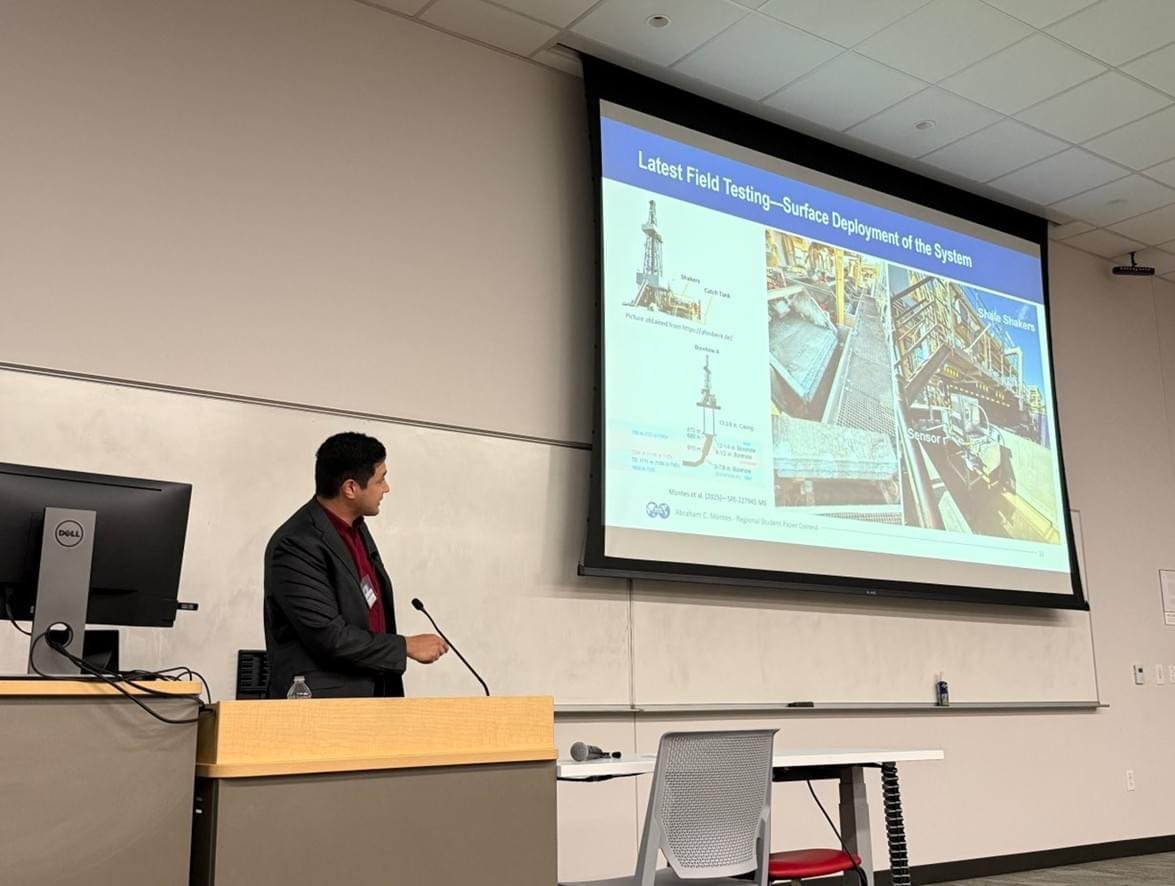
Education

  • Ph.D., Petroleum Engineering The University of Texas at Austin, USA, August 2026
  • M.Sc., Systems and Computational Engineering Pontificia Universidad Javeriana, Bogotá, Colombia, March 2022
  • B.Sc., Petroleum Engineering Universidad Nacional de Colombia, Medellín, Colombia, September 2014

Professional Experience

  • Deep onshore wells in the Colombian foothills
  • Exploratory wells
  • Thru-tubing ultra-slim laterals

My Research Interests

  • Drilling Anomaly Detection in Real Time
  • Stuck Pipe Prevention
  • Wellbore Quality Assessment
  • Hole Cleaning Automation
  • Well Planning Automation
  • Analysis of Longitudinal Data

02

News

Conferences, awards and milestones from the field and the lab.

03

Research

Hybrid physics + AI models for safer, smarter well construction.

Stuck Pipe Prediction and Analysis

Stuck Pipe Prediction and Analysis

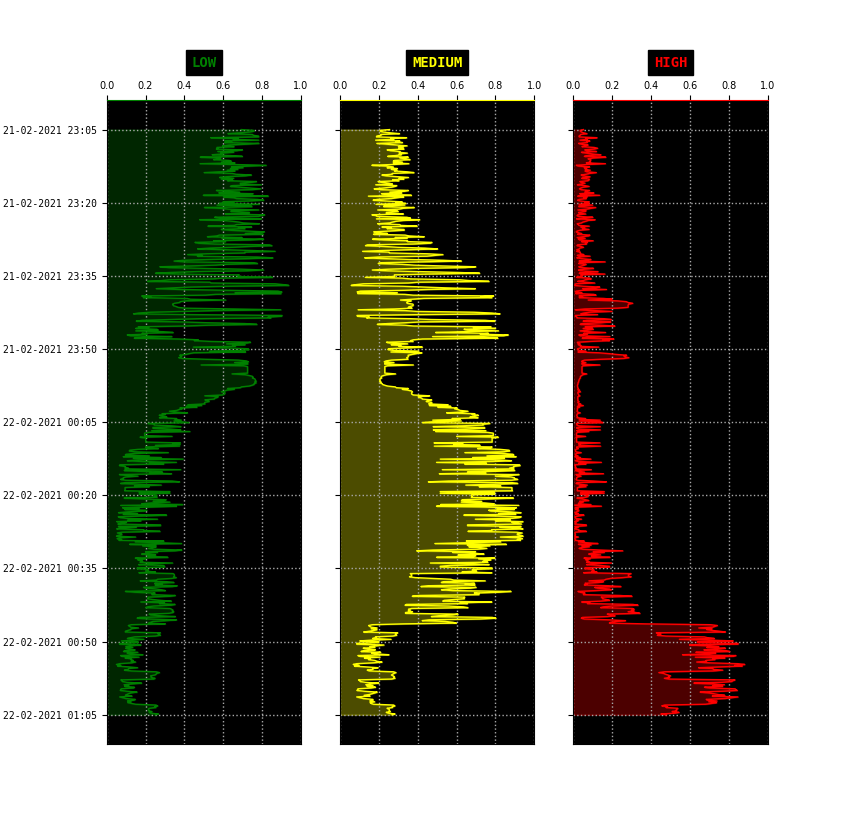
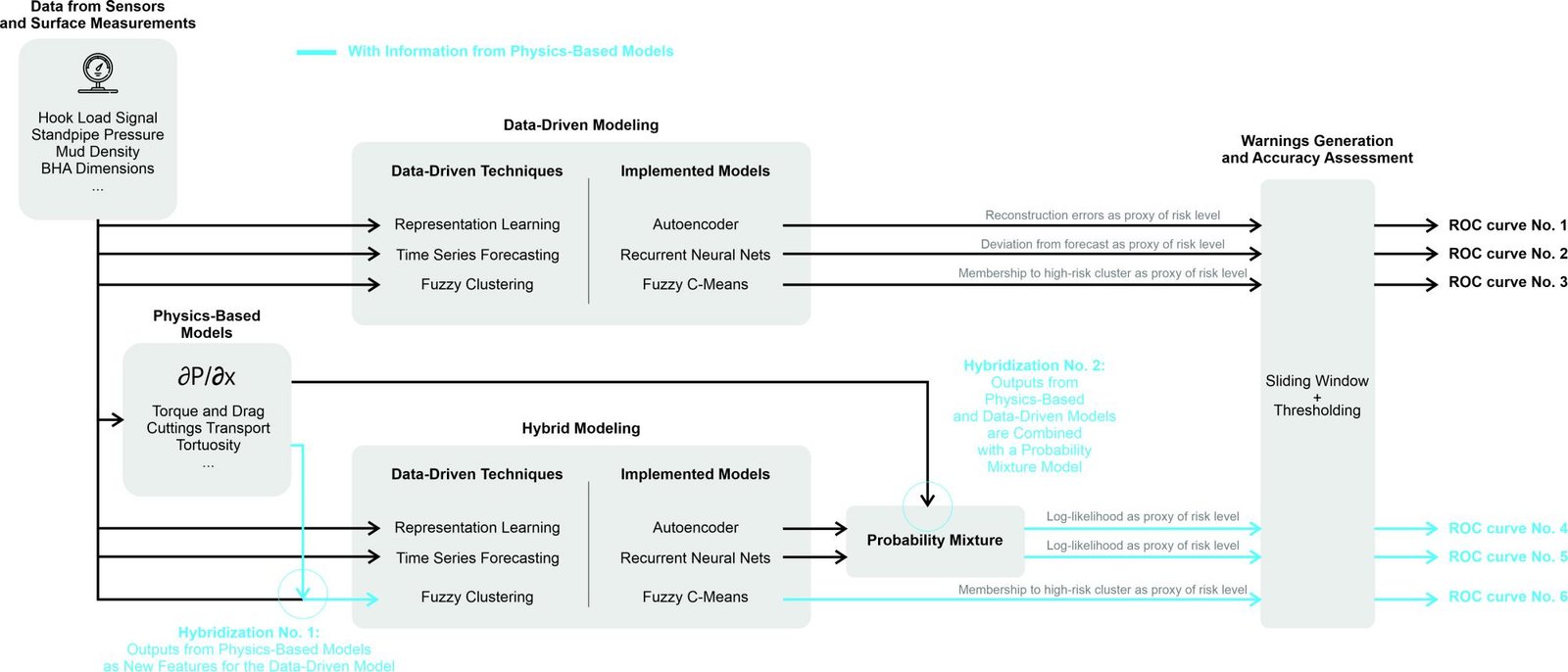
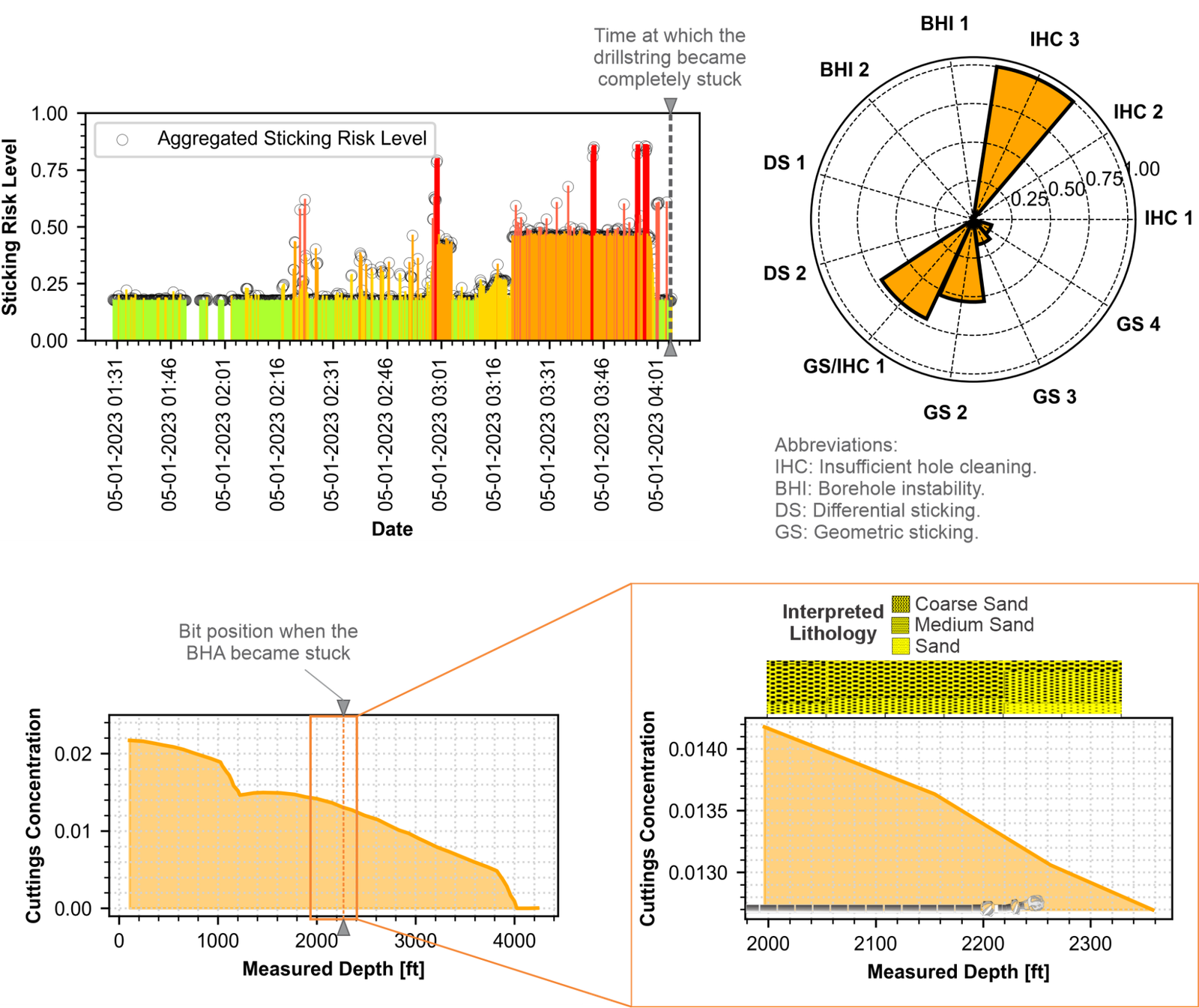
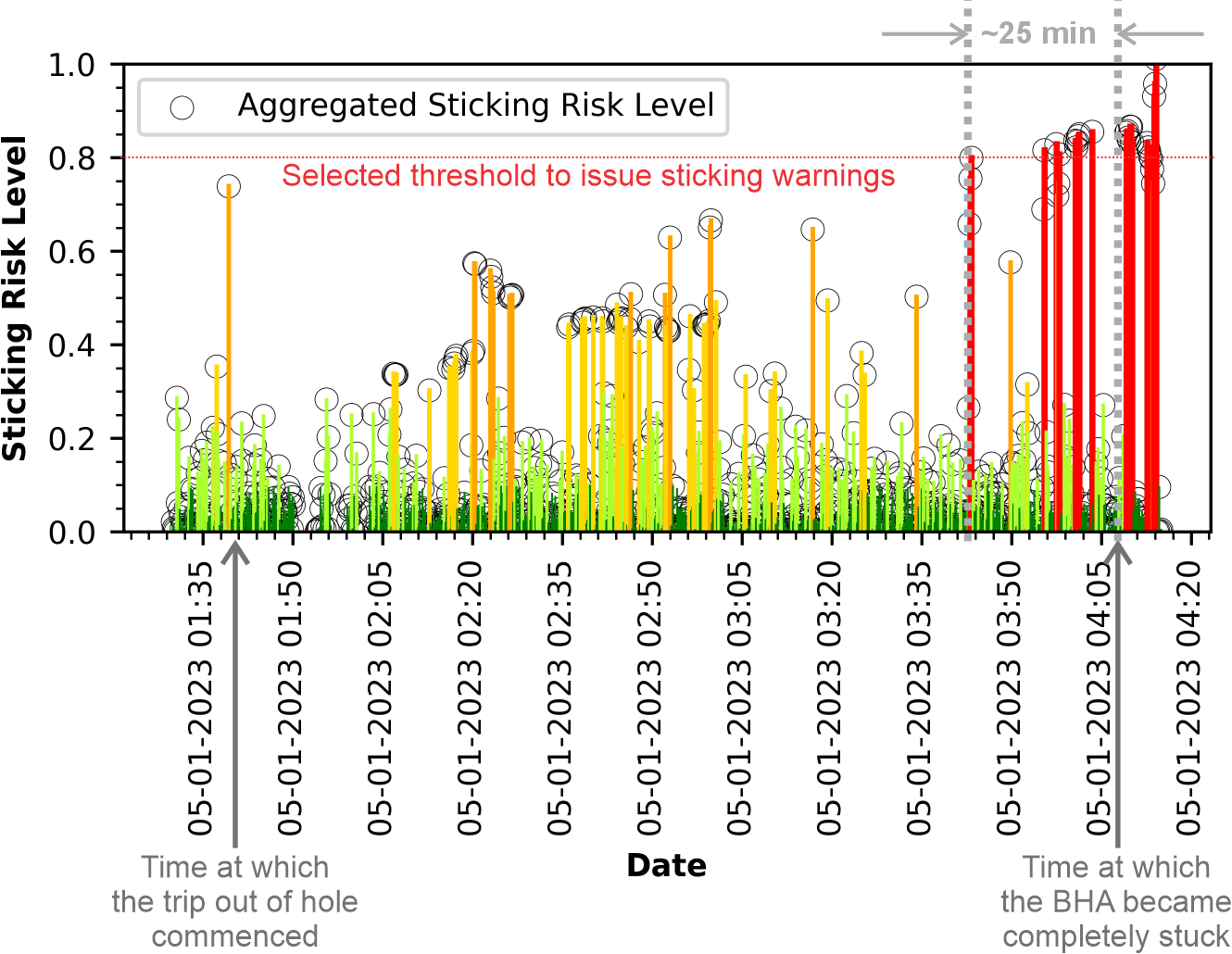
Stuck pipe incidents occur when the drillstring encounters abnormal restrictions to axial movement, potentially resulting in loss of circulation or rotation. These events cause significant financial losses and non-productive time. This research develops a digital tool that analyzes drilling data to detect early signs of sticking and provide real-time warnings about risk levels and underlying causes.

Read more

In drilling operations, stuck pipe incidents occur when the drillstring encounters abnormal and undesired restrictions to axial movement. These restrictions may be accompanied by loss of circulation or rotation capability. Such incidents can result in substantial financial losses and non-productive time. To prevent them, two essential elements are required: (1) accurate anticipation of their occurrence and (2) effective preventative measures. This research project aims to develop a digital tool that analyzes drilling data to identify early signs of sticking. The tool will provide real-time warnings to the drilling team about the risk level and underlying causes of sticking.

For additional information, visit: Review of Stuck Pipe... and Solution for Stuck Pipe Prediction...

Hole Cleaning Automation

Hole Cleaning Automation

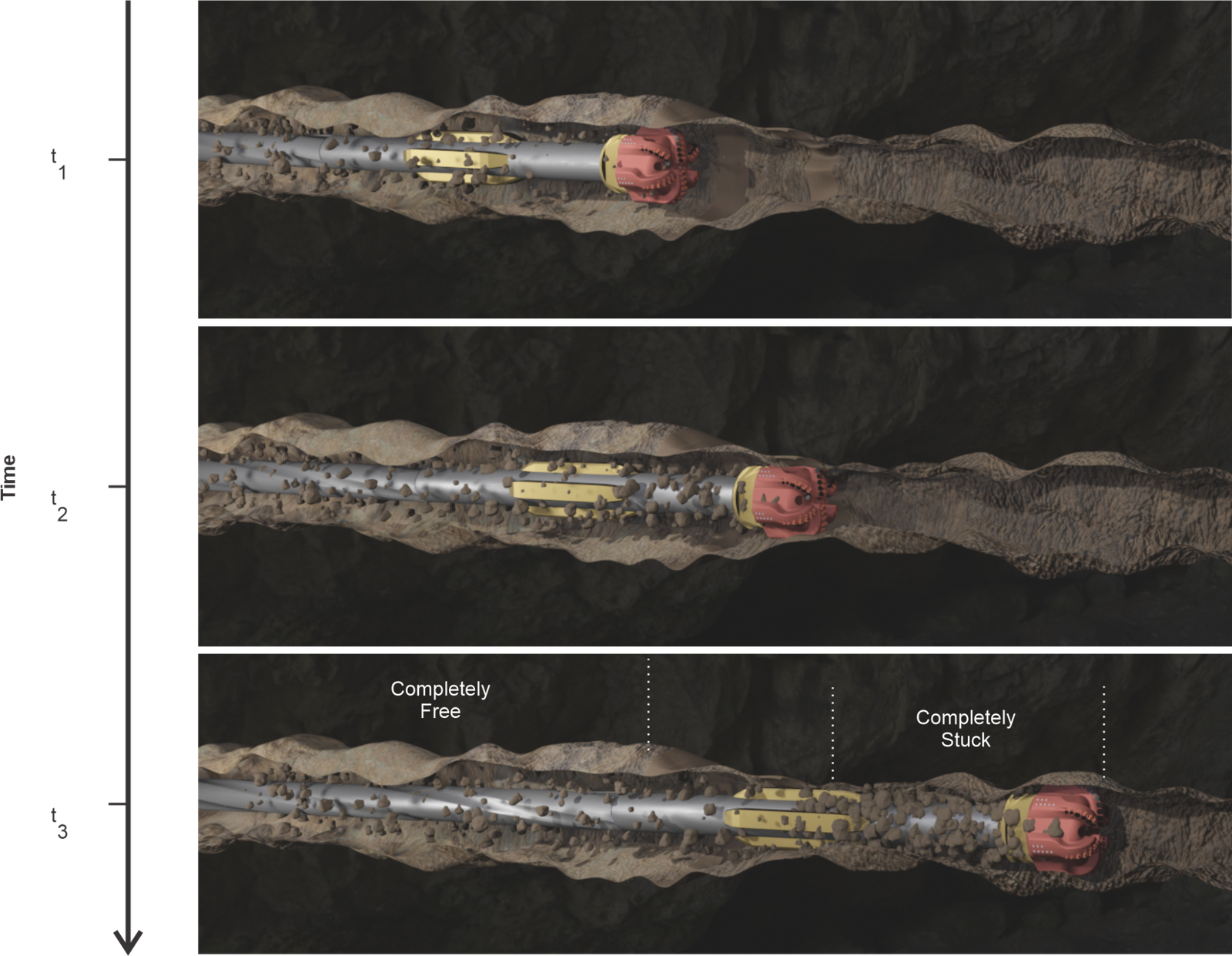
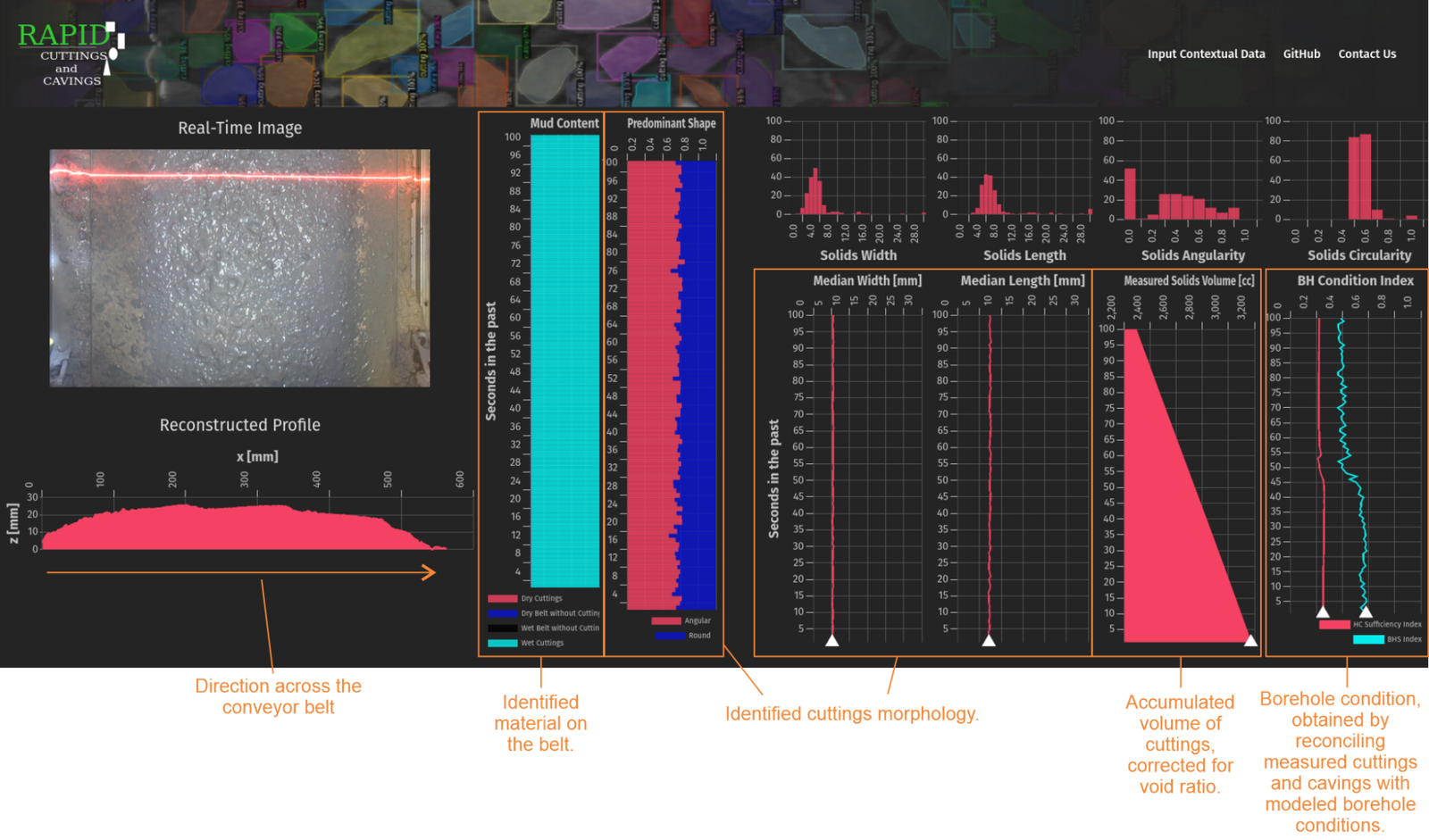
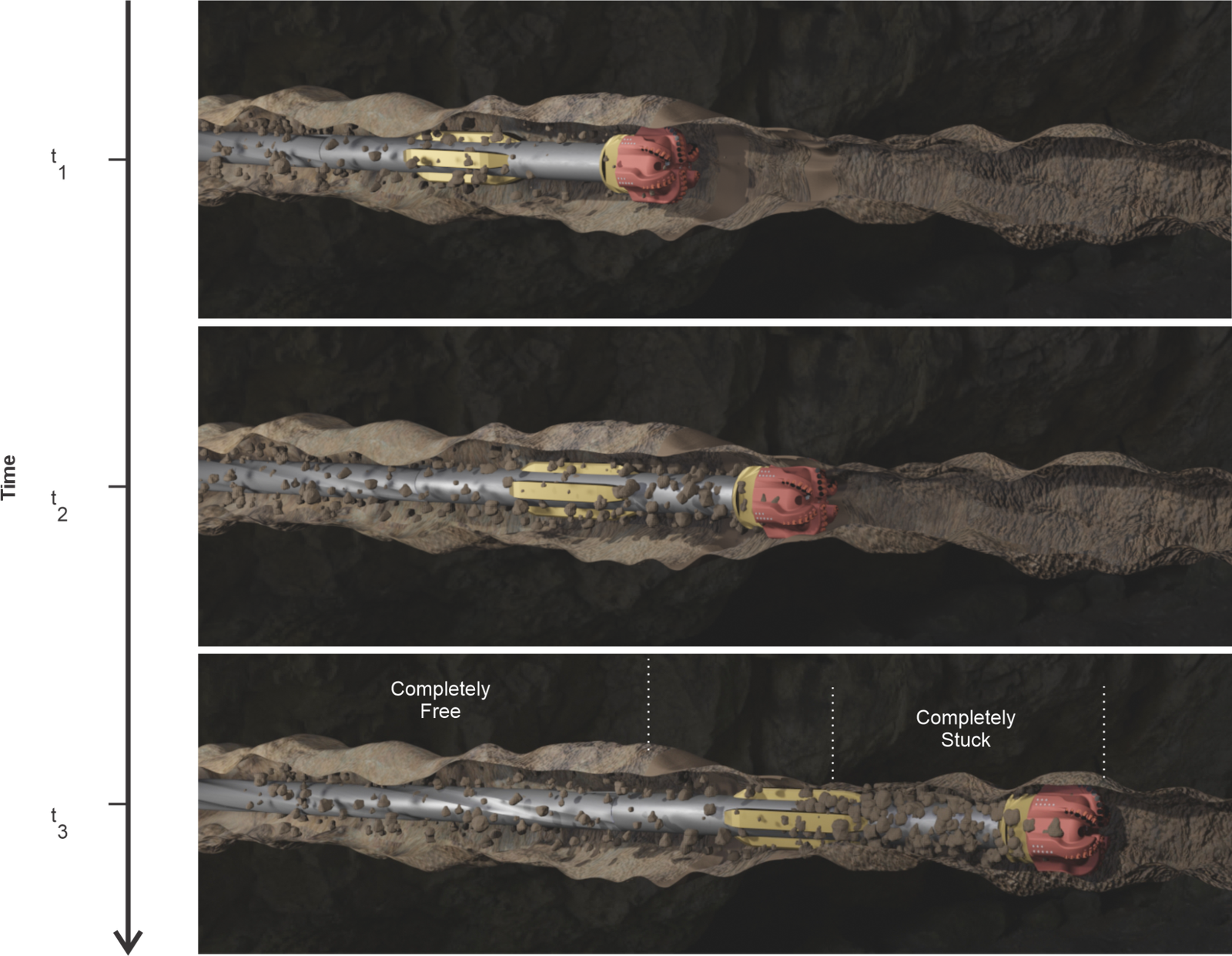
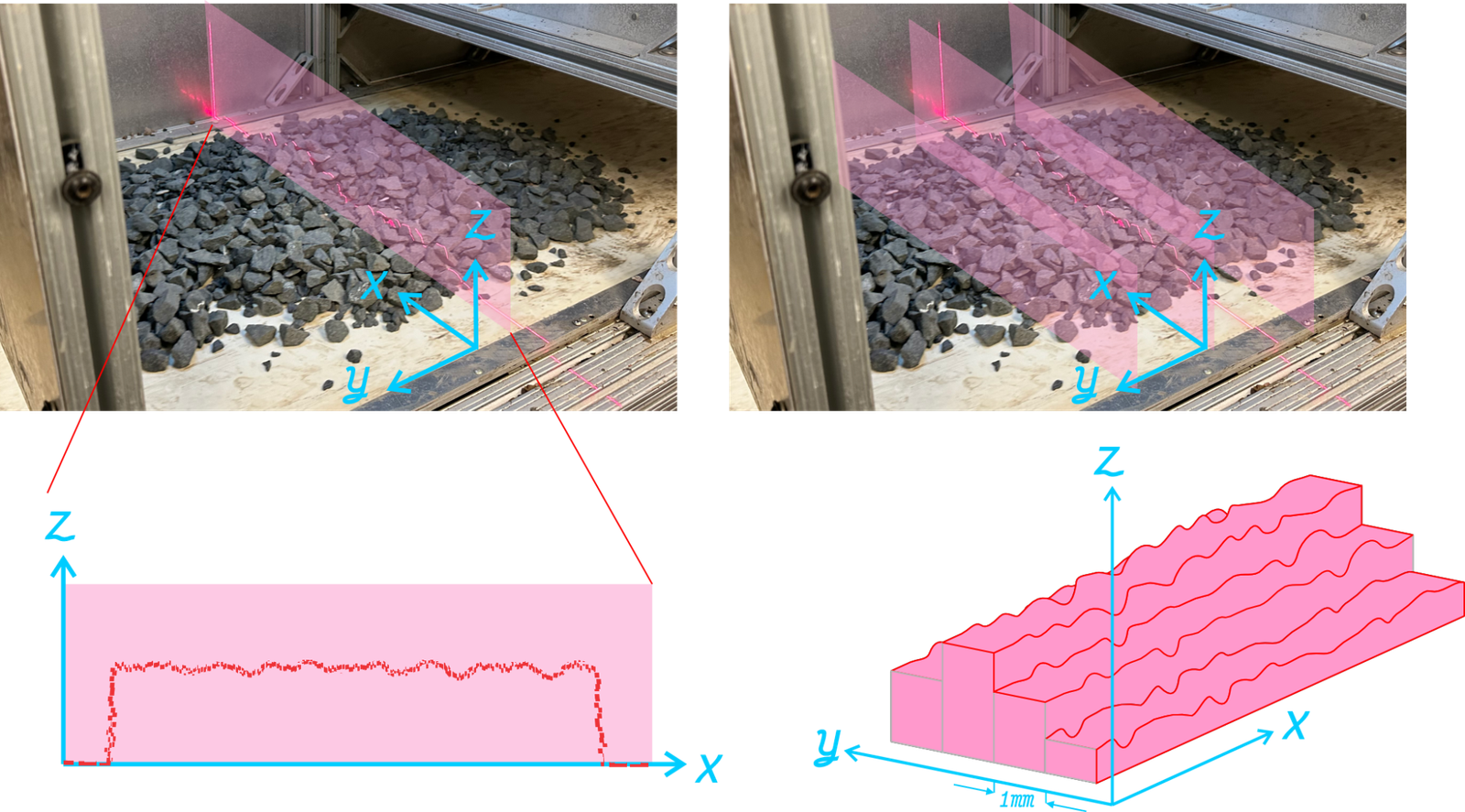
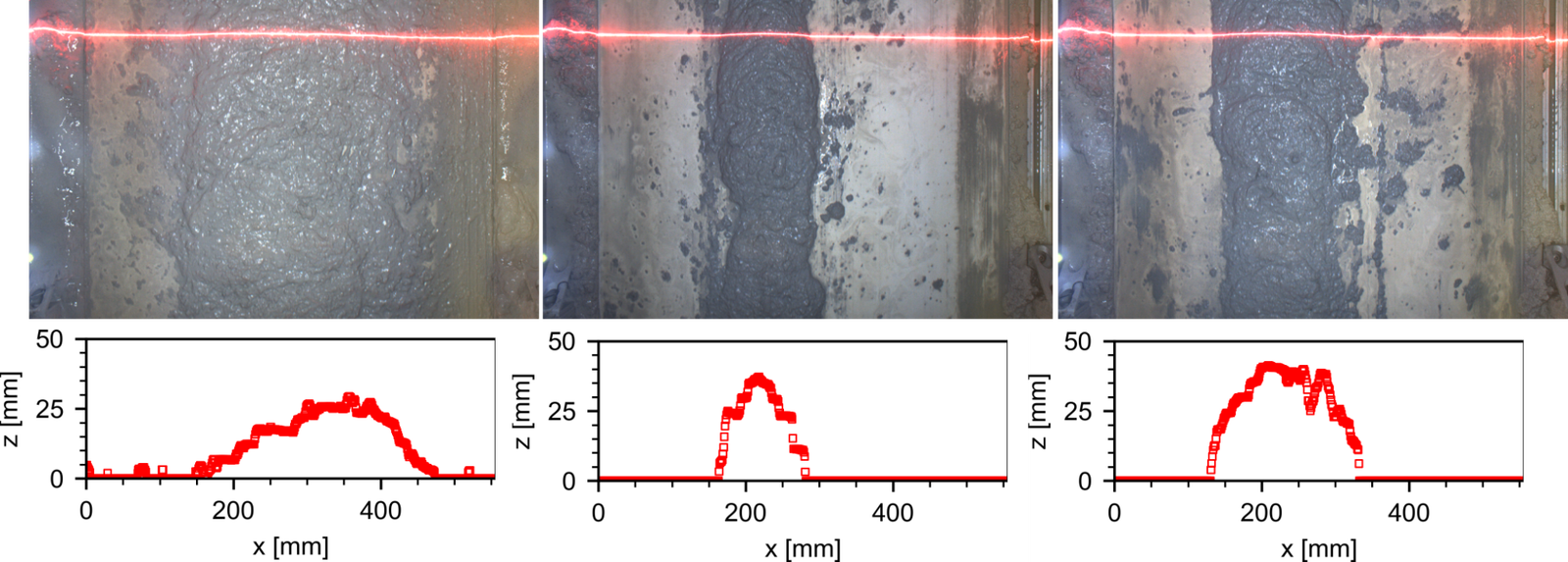
One common stuck pipe mechanism is annular packoff, where rock fragments accumulate in the annular space, restricting axial movement and circulation. This may result from wellbore instability (cavings) or insufficient hole cleaning (cuttings). This research uses 2D and 3D data from a laser-based cuttings sensor developed at UT to assess hole cleaning efficiency and wellbore stability in real time.

Read more

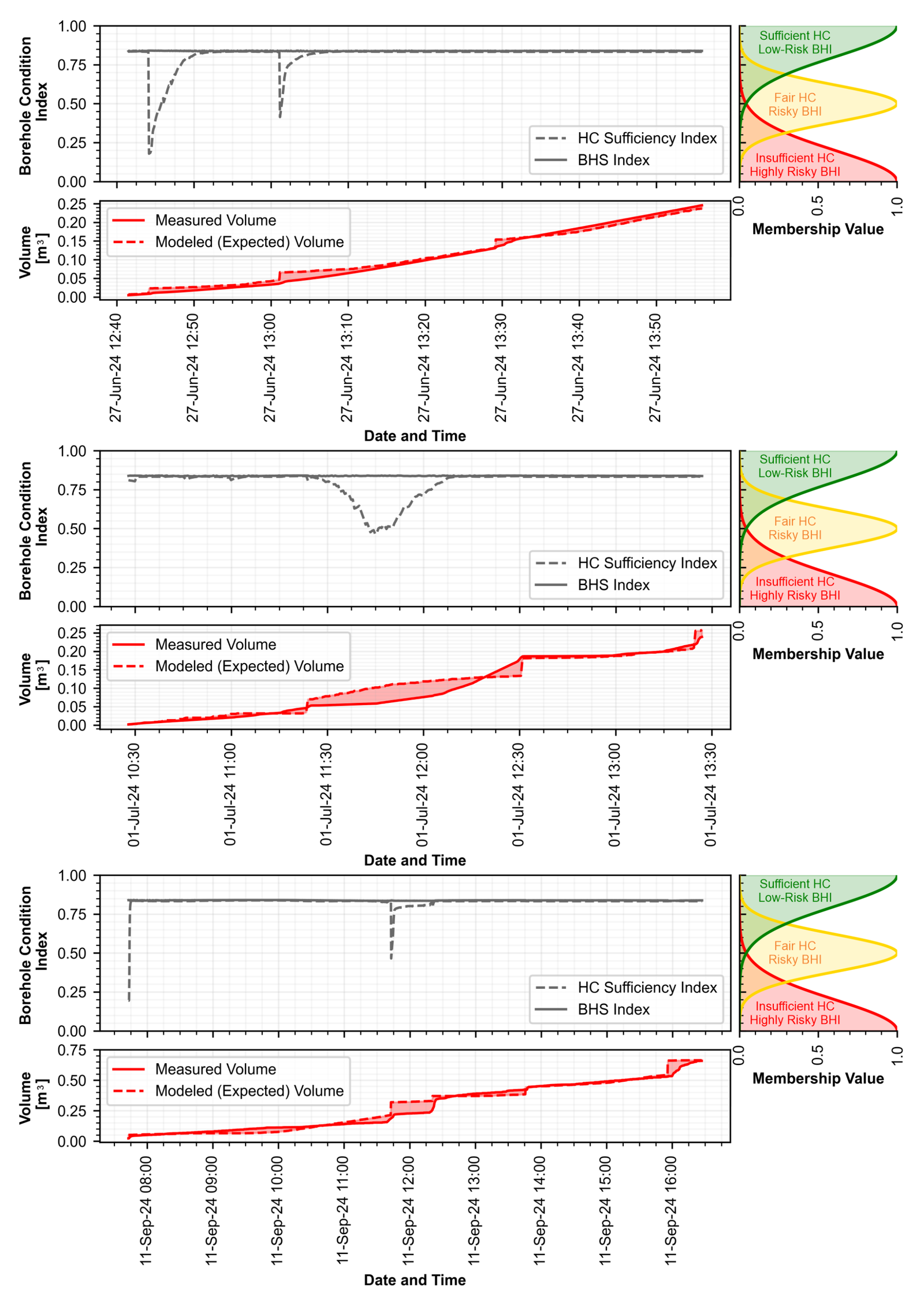
One of the most common mechanisms of stuck pipe is "annular packoff." In this scenario, materials, typically rock fragments, accumulate in the annular space between the drillstring and the wellbore wall, restricting free axial movement and circulation. This issue can result from wellbore instability or insufficient hole cleaning. With wellbore instability, rock fragments known as cavings block the annular space due to rock failure under compressive loads. In cases of insufficient hole cleaning, cuttings are not effectively removed from the hole. Identifying the abnormal accumulation of these materials requires evaluating the volume of returning cuttings/cavings and determining their size and shape distributions.

Traditionally, these tasks are performed manually, which can lead to biased and delayed characterization, hindering timely detection of sticking conditions. This research project utilizes advanced modeling and 2D and 3D data from a laser-based cuttings sensor developed at UT to provide real-time assessments of hole cleaning sufficiency and wellbore stability.

For more information, consult Automatic Determination of Cuttings and Cavings Properties... and Hole Cleaning and Borehole Stability Management...

Automated Casing Runnability Assessment

Automated Casing Runnability Assessment

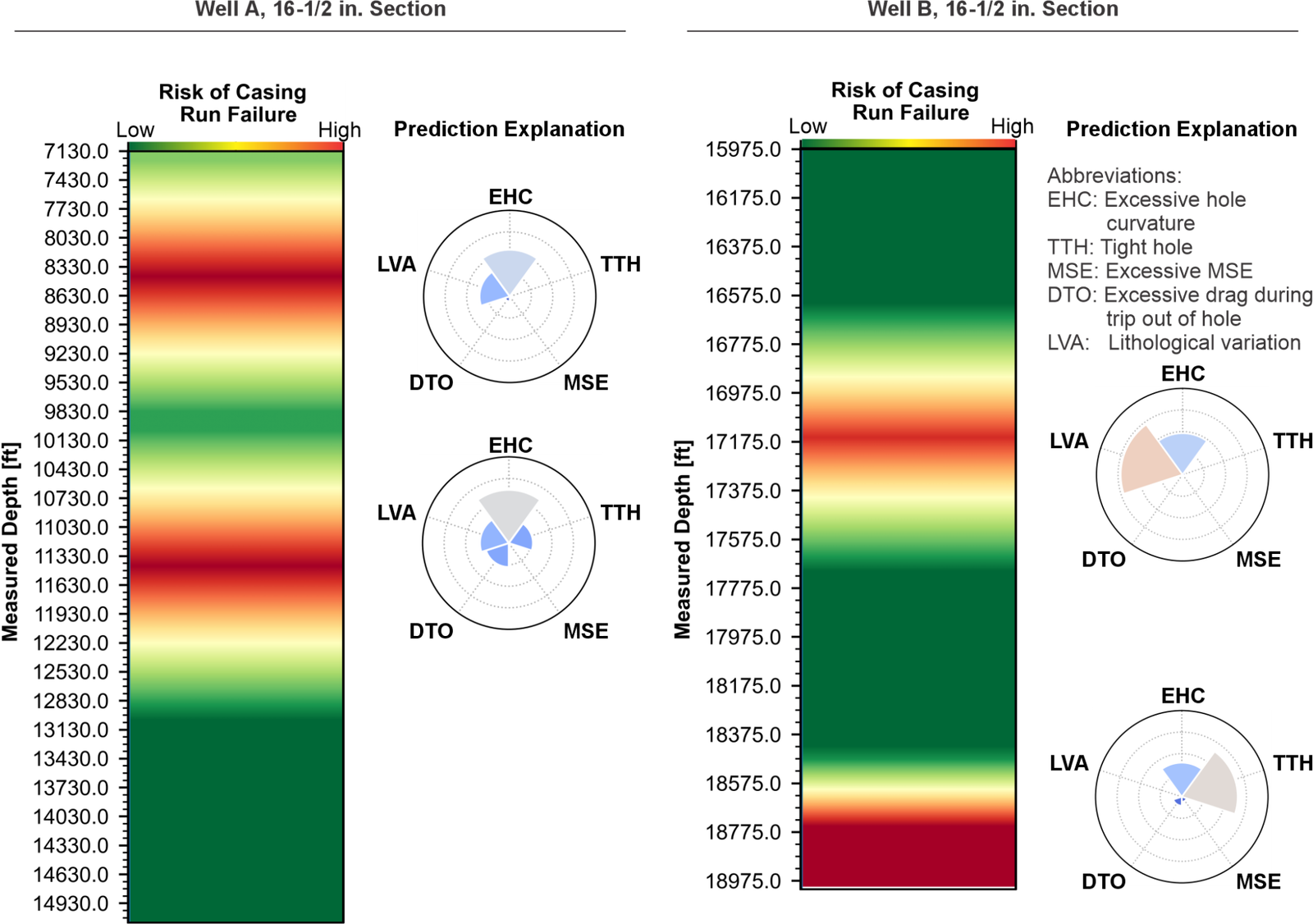
Casing installation can be challenging when the casing string cannot reach the bottom, requiring retrieval or leaving it off-bottom. Both options involve significant risks, costs, and delays. This research develops a digital tool to automatically and thoroughly assess casing run failure risk, providing drilling teams with reliable, objective interpretations to support preventative decisions.

Read more

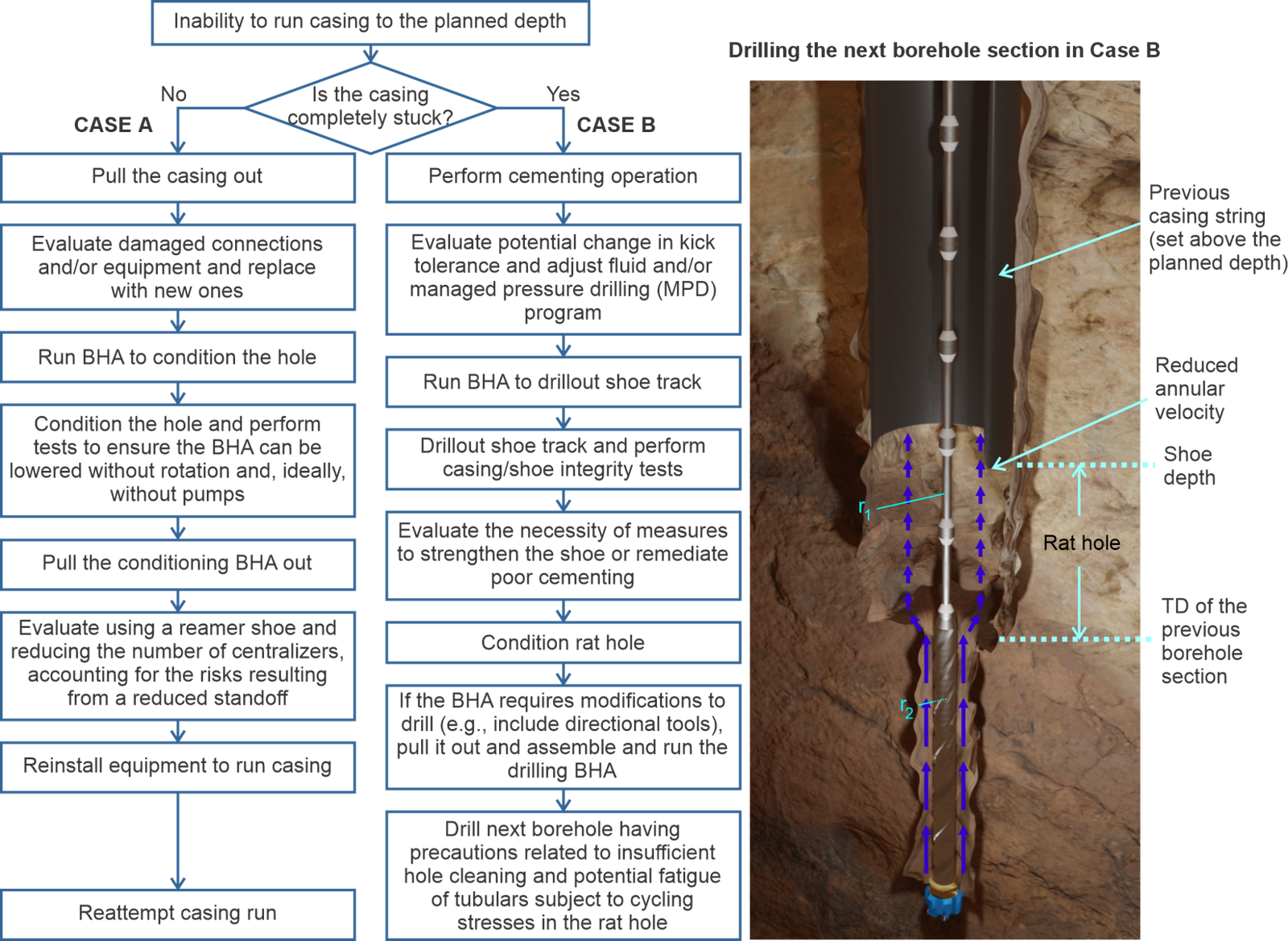
After drilling a hole section, the next operation involves installing the casing string, which often presents various challenges. Sometimes, the casing string cannot be lowered past a certain point, necessitating either its retrieval or leaving it off-bottom. The first scenario involves significant time and cost, while the second transfers several risks to the subsequent section, such as reduced kick tolerance, potential wellbore instability, low annular velocity (leading to insufficient hole cleaning), and more.

To mitigate these situations, a dedicated string may be lowered into the hole to correct undulations, smooth ledges, and circulate cuttings and cavings out. However, this process also consumes considerable time. The decision to take this preventative measure depends on assessing the risk of casing run failure. If the risk is high, the drilling team often opts for a wiper trip despite its cost.

Traditionally, risk assessment is done manually, which has two main disadvantages: (1) due to time constraints, the human assessor can only analyze a limited amount of information, limiting the comprehensiveness of the assessment, and (2) the process involves considerable subjectivity. These limitations can lead to inaccurate assessments, resulting in either failed casing runs or unnecessary, lengthy conditioning operations. This research project develops a digital tool capable of automatically and comprehensively evaluating the risk of casing run failure, providing the drilling team with a meaningful interpretation of the risk.

For more information, consult: Casing Runnability Assessment...

04

Publications

Peer-reviewed journal articles and conference papers.

Review of Stuck Pipe Prediction Methods and Future Directions
Journal 33 citations

Review of Stuck Pipe Prediction Methods and Future Directions

Stuck pipe events continue to be a major cause of nonproductive time (NPT) in well construction operations. Considerable efforts have been made in the past to construct prediction models and early warning systems to prev...

Automatic Determination of Cuttings and Cavings Properties for Hole Cleaning and Wellbore Stability Assessment Using a Laser-Based Sensor
Journal 16 citations

Automatic Determination of Cuttings and Cavings Properties for Hole Cleaning and Wellbore Stability Assessment Using a Laser-Based Sensor

This work describes an accurate method for the automatic, real-time characterization of cuttings and cavings, including their volume, size distribution, and shape/morphology. This method integrates high-resolution images...

Casing Run Failure Avoidance Through Automated Assessment of Borehole Quality
Journal 9 citations

Casing Run Failure Avoidance Through Automated Assessment of Borehole Quality

Traditionally, evaluating a borehole’s readiness to accept casing has relied on a manual, limited, and often biased analysis of an insufficient amount of data. This approach frequently results in casing run failures, lea...

Field Testing of an Automated System for Hole Cleaning and Wellbore Stability Monitoring and Management
Journal 2 citations

Field Testing of an Automated System for Hole Cleaning and Wellbore Stability Monitoring and Management

This paper describes the results of a field test, conducted at a test rig, of a hole cleaning and wellbore stability monitoring system. This system encompasses a laser-based sensor and digital tools designed to process t...

Stuck Pipe Prediction in Utah FORGE Geothermal Wells
Conference 10 citations

Stuck Pipe Prediction in Utah FORGE Geothermal Wells

Four stuck pipe events occurred during the construction of six geothermal wells in the Utah FORGE field, causing several hours of non-productive time (NPT). All of them could have been avoided if effective preventive mea...

Comparing Drilling Anomaly Prediction by Purely Data-Driven and Hybrid Analysis Methods - Case Study of Utah FORGE Geothermal Wells
Conference 8 citations

Comparing Drilling Anomaly Prediction by Purely Data-Driven and Hybrid Analysis Methods - Case Study of Utah FORGE Geothermal Wells

Automatic prediction of drilling incidents can be conducted through either a purely data-driven approach or a hybrid approach. In the first approach, the variable space is typically limited to surface measurements and do...

Enhanced Real-Time Stuck Pipe Prediction Using Hybrid Physics + AI Agents and Comprehensive Sticking Mechanism Evaluation
Conference 1 citation

Enhanced Real-Time Stuck Pipe Prediction Using Hybrid Physics + AI Agents and Comprehensive Sticking Mechanism Evaluation

While multiple solutions exist to predict stuck pipe incidents, most fall short in preventing such incidents due to limitations in accuracy, interpretability, general applicability and/or timeliness of incident warnings....

Hole Cleaning and Borehole Stability Management with Integrated Real-Time Measurements and Modeling
Conference 1 citation

Hole Cleaning and Borehole Stability Management with Integrated Real-Time Measurements and Modeling

Existing methods for evaluating hole cleaning and borehole stability during drilling are often limited, relying either on model-based predictions (e.g., of cuttings accumulation downhole) with infrequent and often inaccu...

Automated Drilling and Production Event Detection Using Advanced Time-Series Pattern Recognition Techniques
Conference 8 citations

Automated Drilling and Production Event Detection Using Advanced Time-Series Pattern Recognition Techniques

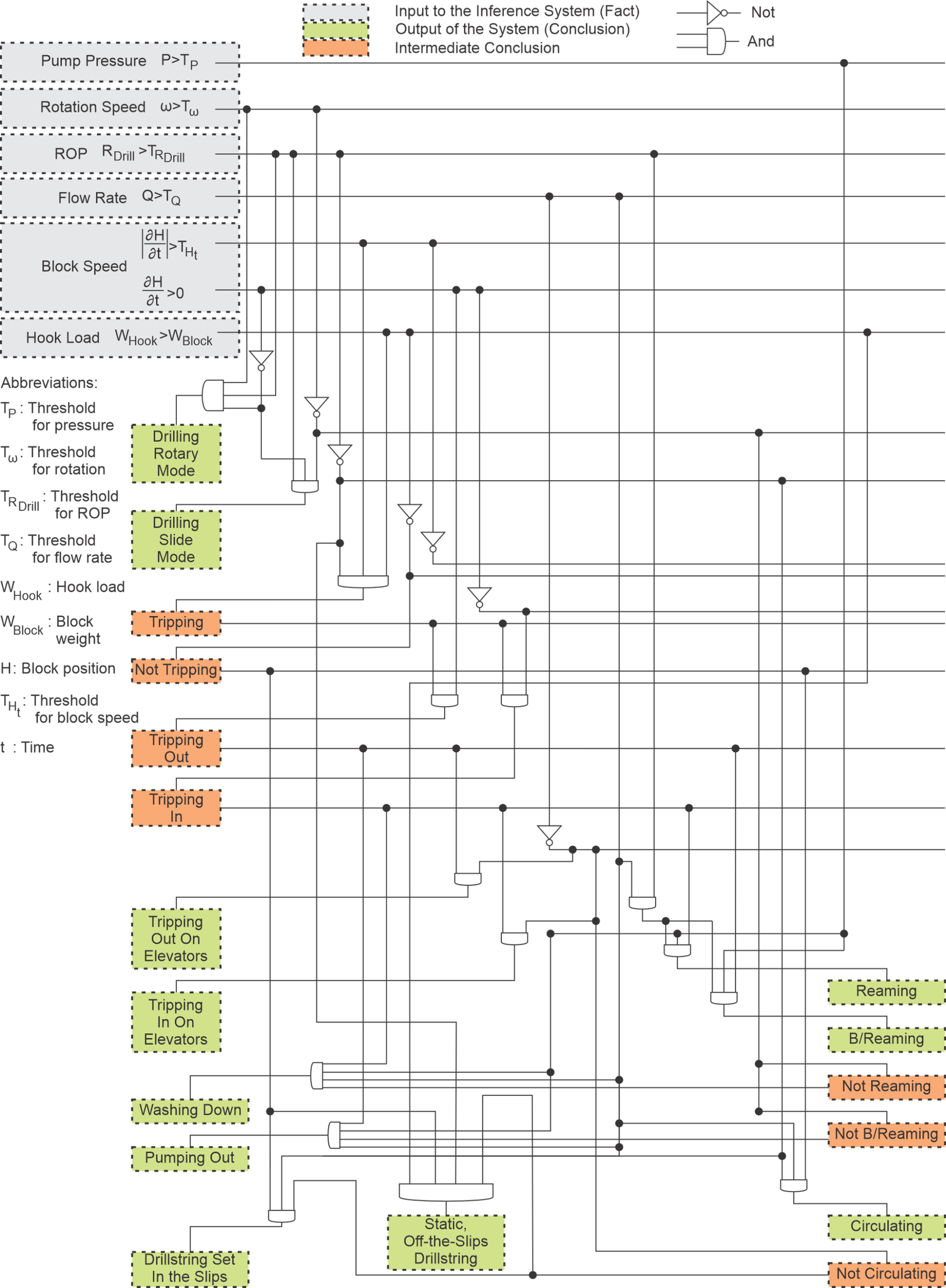
The identification of well/rig states in time is crucial for accurate risk assessment, event/incident detection, and efficiency tracking in drilling and production operations. State identification has traditionally relie...

Aspects of Drilling Complex Wells in Foothill Environments During Times of Crisis
Journal 4 citations

Aspects of Drilling Complex Wells in Foothill Environments During Times of Crisis

The depletion of conventional reservoirs and the engineering challenges it entails are evident. In the Colombian foothills, the trend has been clear: over the past three years, the deepest wells have been drilled, reachi...

Engineering Challenges and Solutions in the Design of an Exploratory Re-entry from the Intermediate Casing in the Colombian Sub-Andean Basin: A Case Study
Journal 1 citation

Engineering Challenges and Solutions in the Design of an Exploratory Re-entry from the Intermediate Casing in the Colombian Sub-Andean Basin: A Case Study

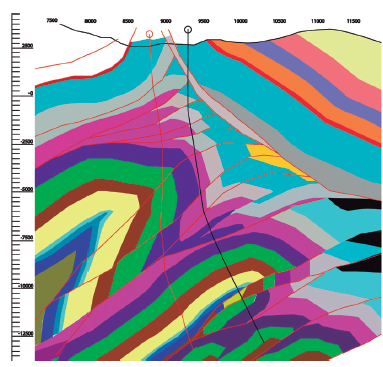
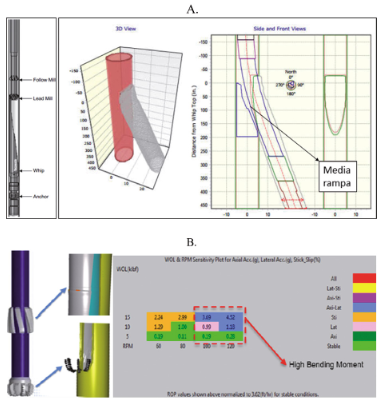
The formations and structures in Niscota, an exploration field in the Colombian Sub-Andean Basin, are characterized by high tectonic, geomechanical, and sedimentological complexity, similar to those of its southern neigh...

05

Awards & Distinctions

Recognition for research, presentations and academic work.

1st Place 🥇 SPE Gulf Coast North America/Southwestern North America Regional Paper Contest—Doctoral Division

1st Place 🥇 SPE Gulf Coast North America/Southwestern North America Regional Paper Contest—Doctoral Division

Society of Petroleum Engineers

For placing 1st in the PhD Division of the 2026 SPE Gulf Coast NA/Southwestern NA Regional Paper Contest with his presentation: "Hole Cleaning and Borehole Stability Management with Integrated Real-Time Measurements and Modeling"

1st Place 🥇 SPE Paper Contest—Doctoral Division

1st Place 🥇 SPE Paper Contest—Doctoral Division

The University of Texas at Austin

For placing 1st in the PhD Division of the 2026 SPE Local Paper Contest at The University of Texas at Austin, with his presentation titled "Hole Cleaning and Borehole Stability Management with Integrated Real-Time Measurements and Modeling"

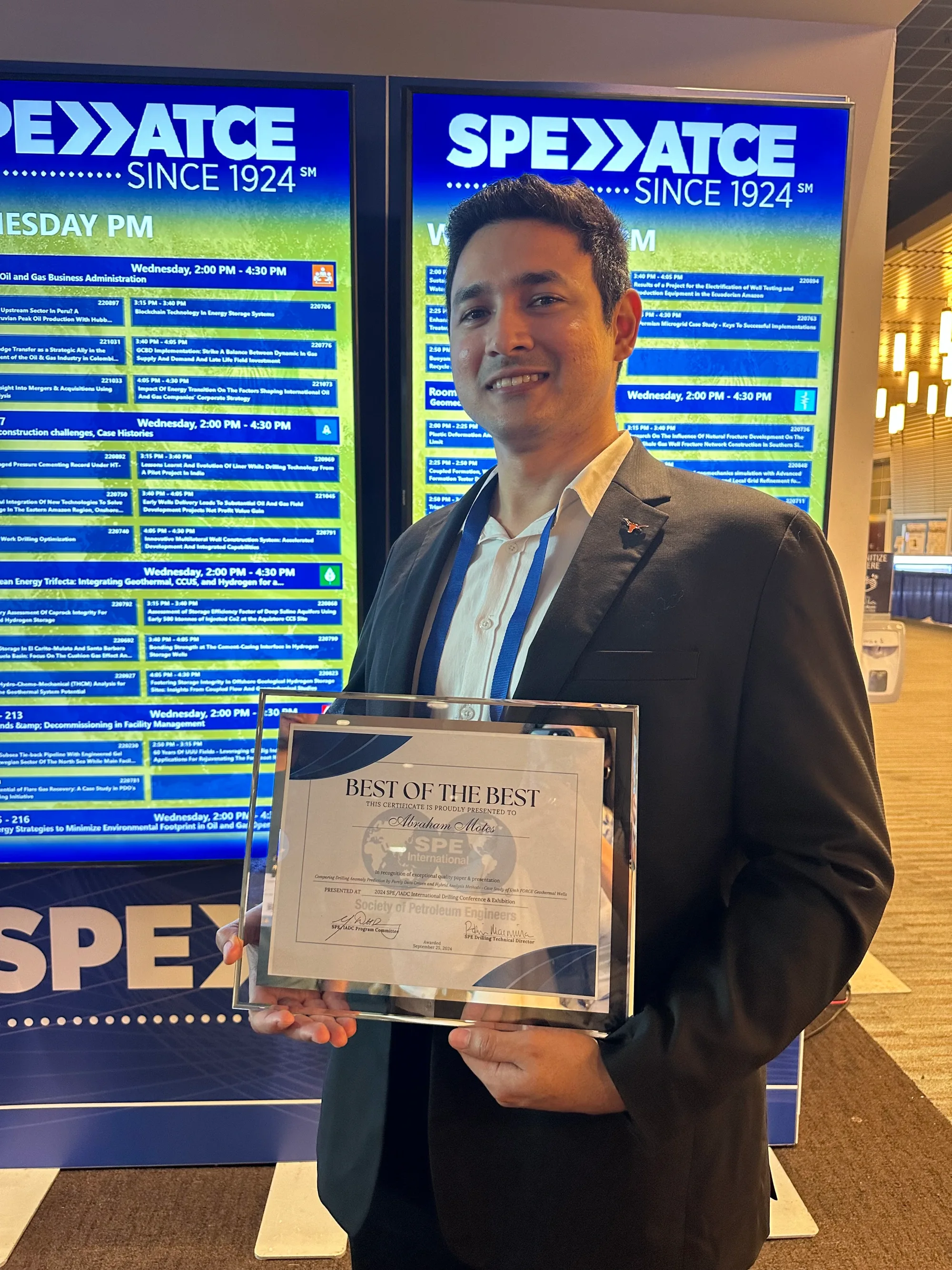
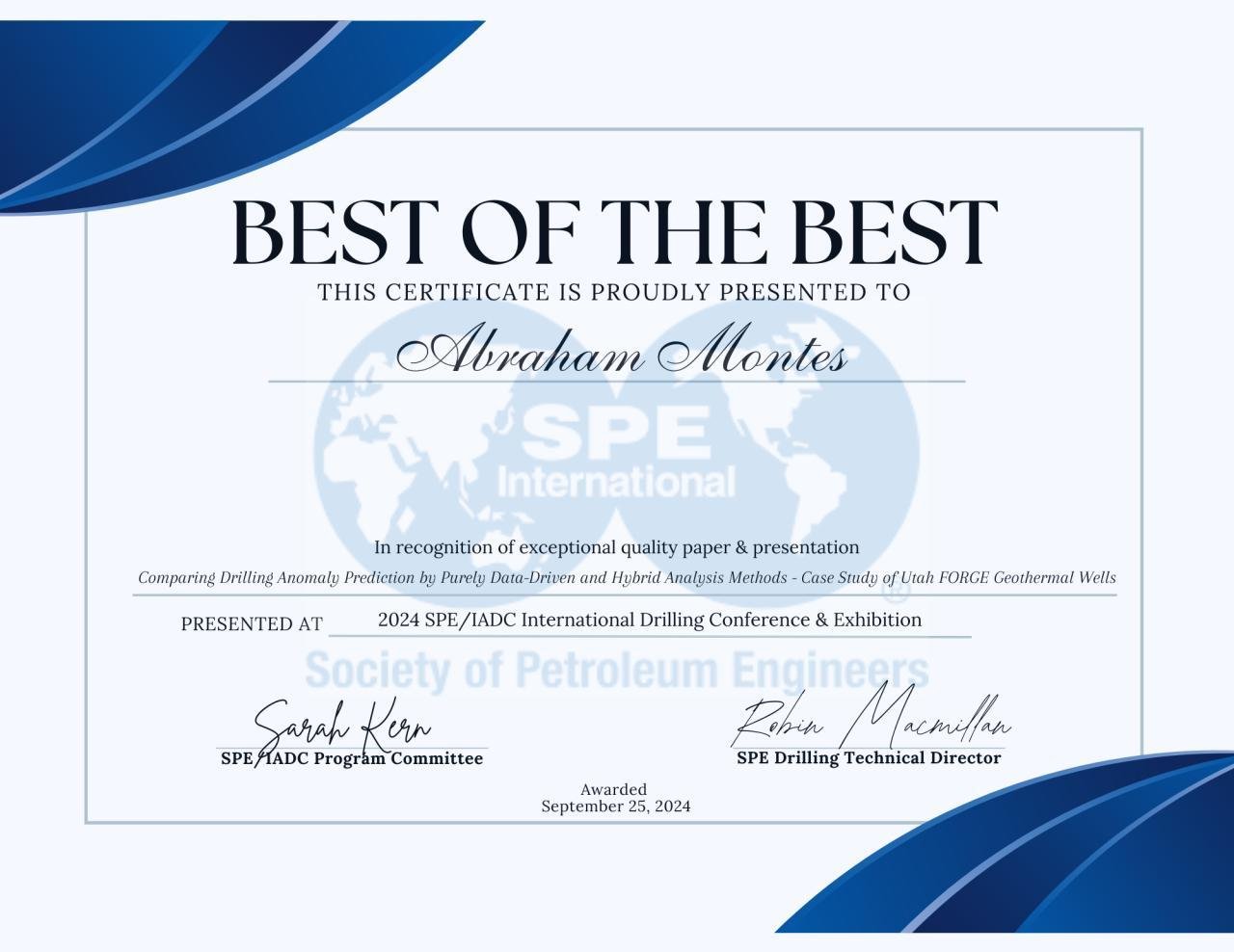
Best of the Best Paper Drilling Conference

Best of the Best Paper Drilling Conference

Society of Petroleum Engineers

In recognition of exceptional quality paper & presentation: "Comparing Drilling Anomaly Prediction by Purely Data-Driven and Hybrid Analysis Methods - Case Study of Utah FORGE Geothermal Wells," presented at the 2024 IADC/SPE International Drilling Conference and Exhibition

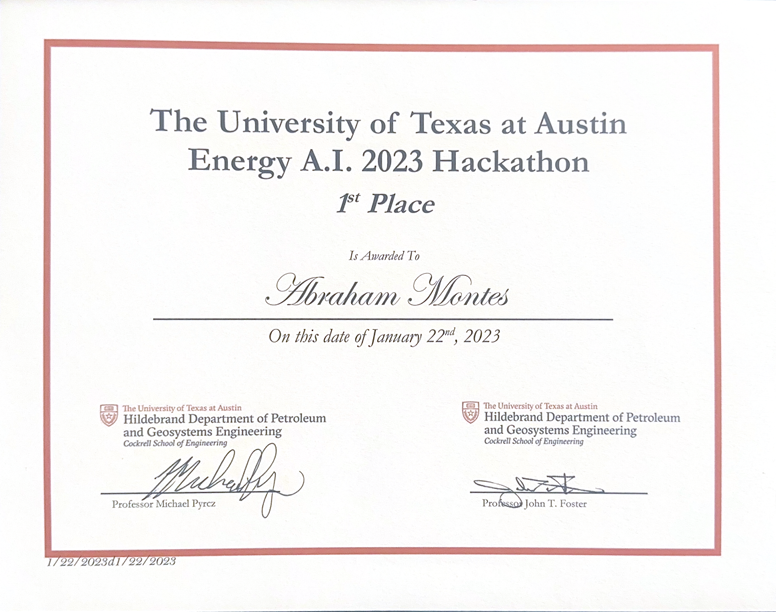
1st Place 🥇 Energy AI Hackathon 2023

1st Place 🥇 Energy AI Hackathon 2023

The University of Texas at Austin

Energy A.I. 2023 Hackathon at The University of Texas at Austin

Fulbright Scholarship

Fulbright Scholarship

Fulbright & Ministerio de Ciencias y Tecnología

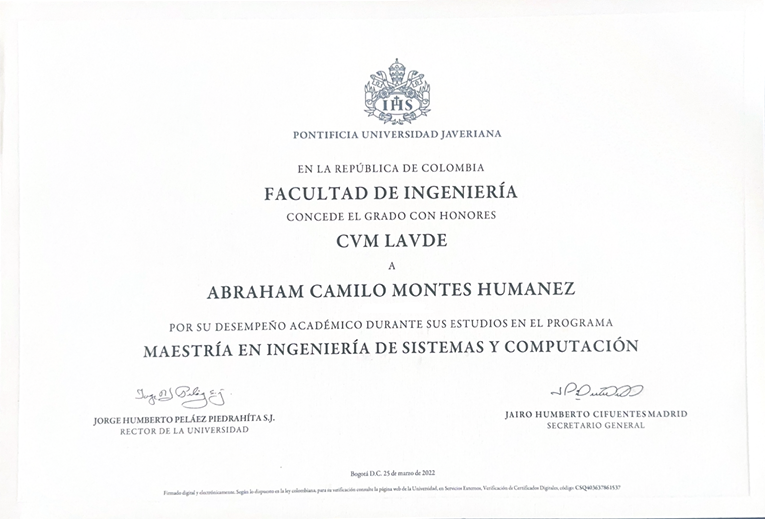
Cum Laude Degree 🎖️

Cum Laude Degree 🎖️

Pontificia Universidad Javeriana

Pontificia Universidad Javeriana awards the Cum Laude honors distinction in recognition of your outstanding academic performance throughout the Master's Degree in Systems and Computational Engineering program

07

Contact Me

Let's talk about your next project.