Research

Hybrid physics + AI models for safer, smarter well construction.

Stuck Pipe Prediction and Analysis

Stuck Pipe Prediction and Analysis

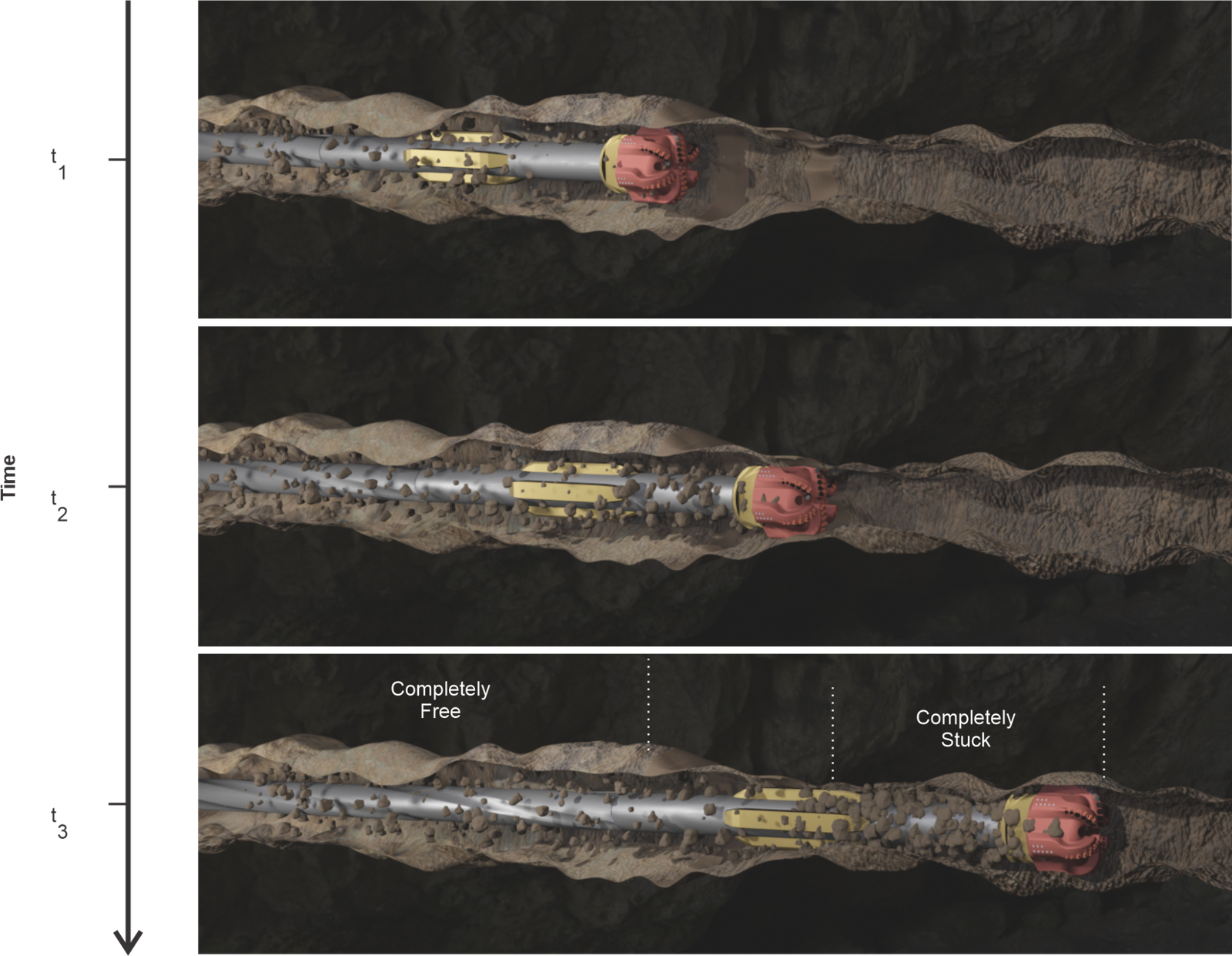
Stuck pipe incidents occur when the drillstring encounters abnormal restrictions to axial movement, potentially resulting in loss of circulation or rotation. These events cause significant financial losses and non-productive time. This research develops a digital tool that analyzes drilling data to detect early signs of sticking and provide real-time warnings about risk levels and underlying causes.

Read more

In drilling operations, stuck pipe incidents occur when the drillstring encounters abnormal and undesired restrictions to axial movement. These restrictions may be accompanied by loss of circulation or rotation capability. Such incidents can result in substantial financial losses and non-productive time. To prevent them, two essential elements are required: (1) accurate anticipation of their occurrence and (2) effective preventative measures. This research project aims to develop a digital tool that analyzes drilling data to identify early signs of sticking. The tool will provide real-time warnings to the drilling team about the risk level and underlying causes of sticking.

For additional information, visit: Review of Stuck Pipe... and Solution for Stuck Pipe Prediction...
Hole Cleaning Automation

Hole Cleaning Automation

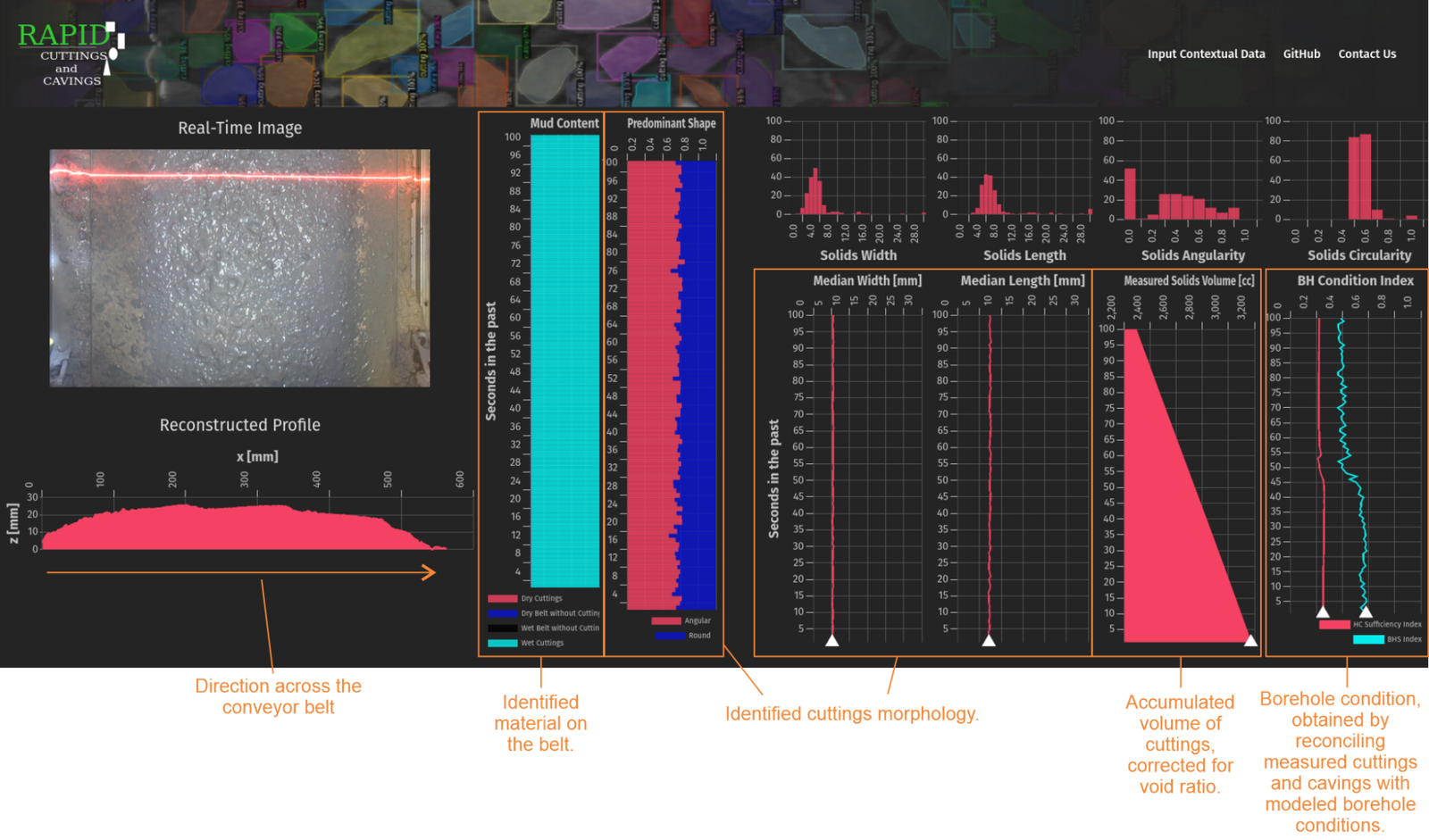
One common stuck pipe mechanism is annular packoff, where rock fragments accumulate in the annular space, restricting axial movement and circulation. This may result from wellbore instability (cavings) or insufficient hole cleaning (cuttings). This research uses 2D and 3D data from a laser-based cuttings sensor developed at UT to assess hole cleaning efficiency and wellbore stability in real time.

Read more

One of the most common mechanisms of stuck pipe is "annular packoff." In this scenario, materials, typically rock fragments, accumulate in the annular space between the drillstring and the wellbore wall, restricting free axial movement and circulation. This issue can result from wellbore instability or insufficient hole cleaning. With wellbore instability, rock fragments known as cavings block the annular space due to rock failure under compressive loads. In cases of insufficient hole cleaning, cuttings are not effectively removed from the hole. Identifying the abnormal accumulation of these materials requires evaluating the volume of returning cuttings/cavings and determining their size and shape distributions.

Traditionally, these tasks are performed manually, which can lead to biased and delayed characterization, hindering timely detection of sticking conditions. This research project utilizes advanced modeling and 2D and 3D data from a laser-based cuttings sensor developed at UT to provide real-time assessments of hole cleaning sufficiency and wellbore stability.

For more information, consult Automatic Determination of Cuttings and Cavings Properties... and Hole Cleaning and Borehole Stability Management...

Automated Casing Runnability Assessment

Automated Casing Runnability Assessment

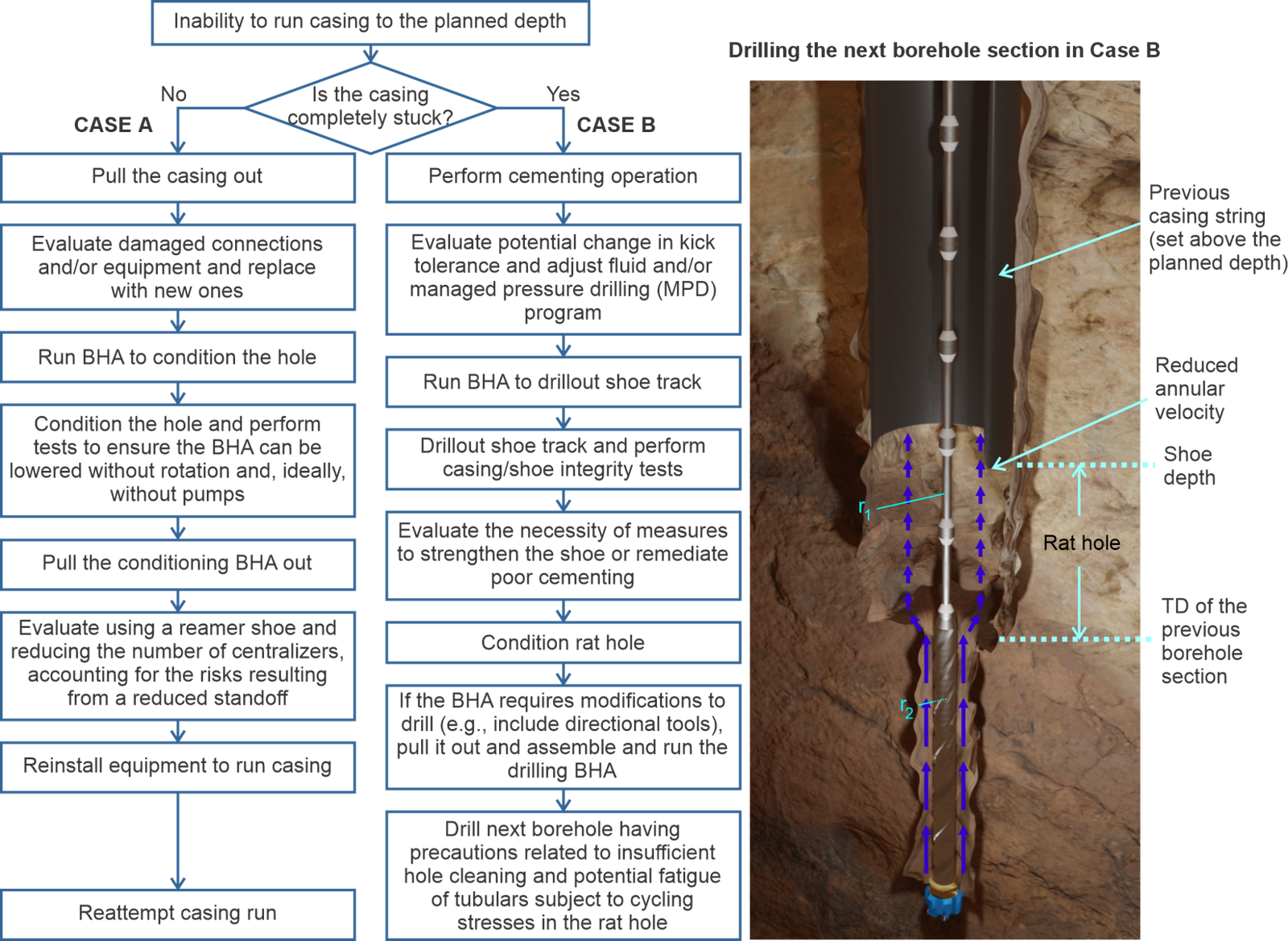
Casing installation can be challenging when the casing string cannot reach the bottom, requiring retrieval or leaving it off-bottom. Both options involve significant risks, costs, and delays. This research develops a digital tool to automatically and thoroughly assess casing run failure risk, providing drilling teams with reliable, objective interpretations to support preventative decisions.

Read more

After drilling a hole section, the next operation involves installing the casing string, which often presents various challenges. Sometimes, the casing string cannot be lowered past a certain point, necessitating either its retrieval or leaving it off-bottom. The first scenario involves significant time and cost, while the second transfers several risks to the subsequent section, such as reduced kick tolerance, potential wellbore instability, low annular velocity (leading to insufficient hole cleaning), and more.

To mitigate these situations, a dedicated string may be lowered into the hole to correct undulations, smooth ledges, and circulate cuttings and cavings out. However, this process also consumes considerable time. The decision to take this preventative measure depends on assessing the risk of casing run failure. If the risk is high, the drilling team often opts for a wiper trip despite its cost.

Traditionally, risk assessment is done manually, which has two main disadvantages: (1) due to time constraints, the human assessor can only analyze a limited amount of information, limiting the comprehensiveness of the assessment, and (2) the process involves considerable subjectivity. These limitations can lead to inaccurate assessments, resulting in either failed casing runs or unnecessary, lengthy conditioning operations. This research project develops a digital tool capable of automatically and comprehensively evaluating the risk of casing run failure, providing the drilling team with a meaningful interpretation of the risk.

For more information, consult: Casing Runnability Assessment...